Is HIFU Painful or Tolerable? A Complete Guide Before You Try It
Non-invasive skin tightening treatments have seen a significant rise in demand across Malaysia and Korea, especially among individuals seeking lifting and contouring without surgery. Among these, HIFU has become one of the most requested procedures.
However, one question continues to come up:
Is HIFU treatment painful?
This article provides a clear, medically grounded explanation of what HIFU feels like, what influences discomfort, and what you can realistically expect, especially when performed using Korean protocols at Ozhean Clinic.
What Is HIFU Treatment?
HIFU stands for High-Intensity Focused Ultrasound, a non-invasive technology designed to lift, tighten, and contour the skin.
Unlike surface-level treatments, HIFU targets deeper structural layers, including the SMAS (Superficial Muscular Aponeurotic System); the same layer addressed in surgical facelifts.
Common Uses
- Skin lifting and tightening
- Jawline definition and contouring
- Reduction of sagging skin
- Neck tightening
In Korea, HIFU is widely used to achieve the V-shaped facial contour, focusing on slimming and lifting the lower face for a more refined profile.
How HIFU Works on the Skin?
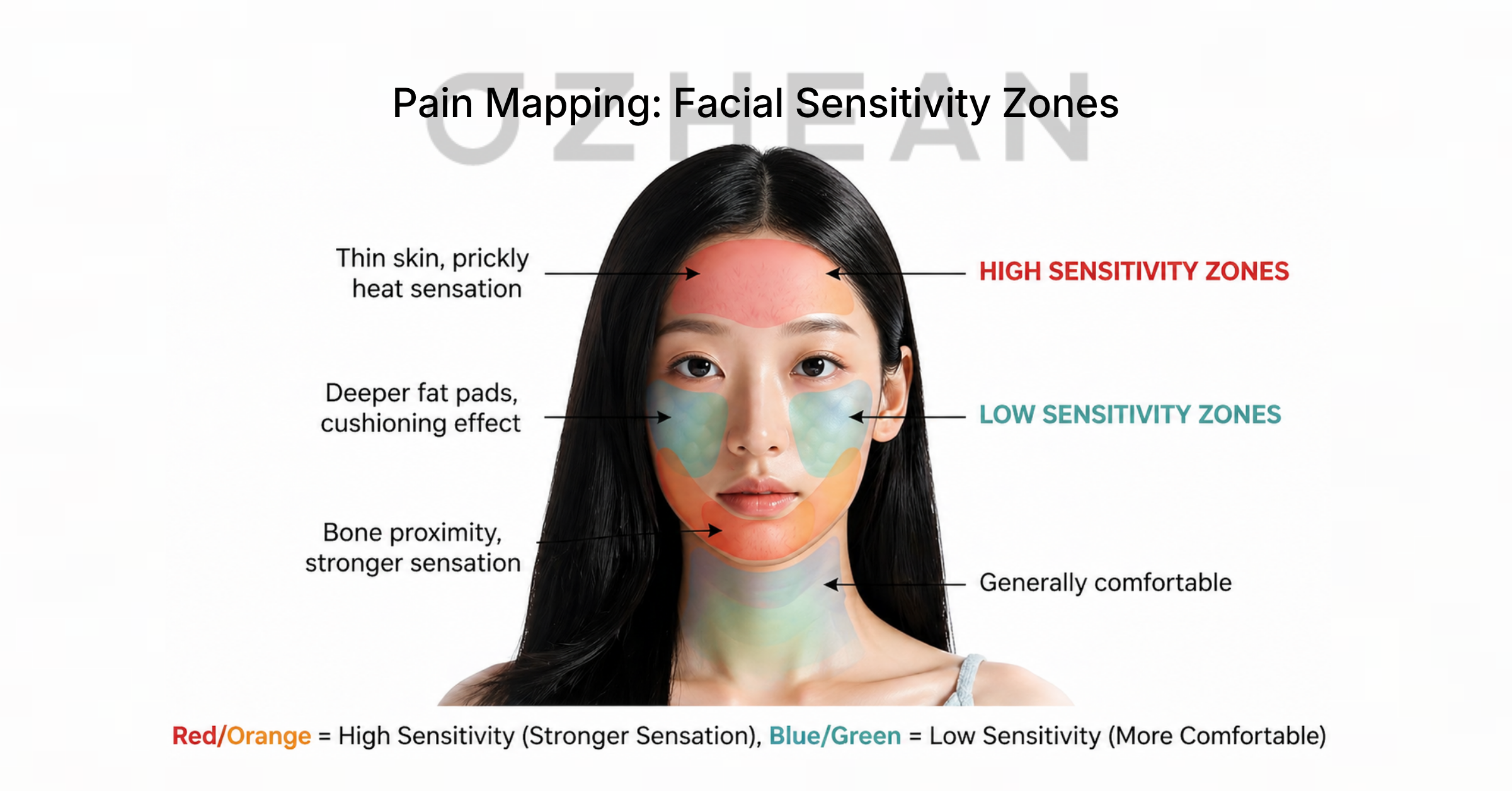
HIFU delivers focused ultrasound energy into specific depths of the skin.
This creates controlled thermal points that:
- Stimulate collagen production
- Cause tissue contraction
- Trigger natural skin lifting over time
Results are not immediate but develop gradually as collagen rebuilds; leading to firmer, tighter, and more lifted skin.
Key Principles of Korean HIFU Face Mapping
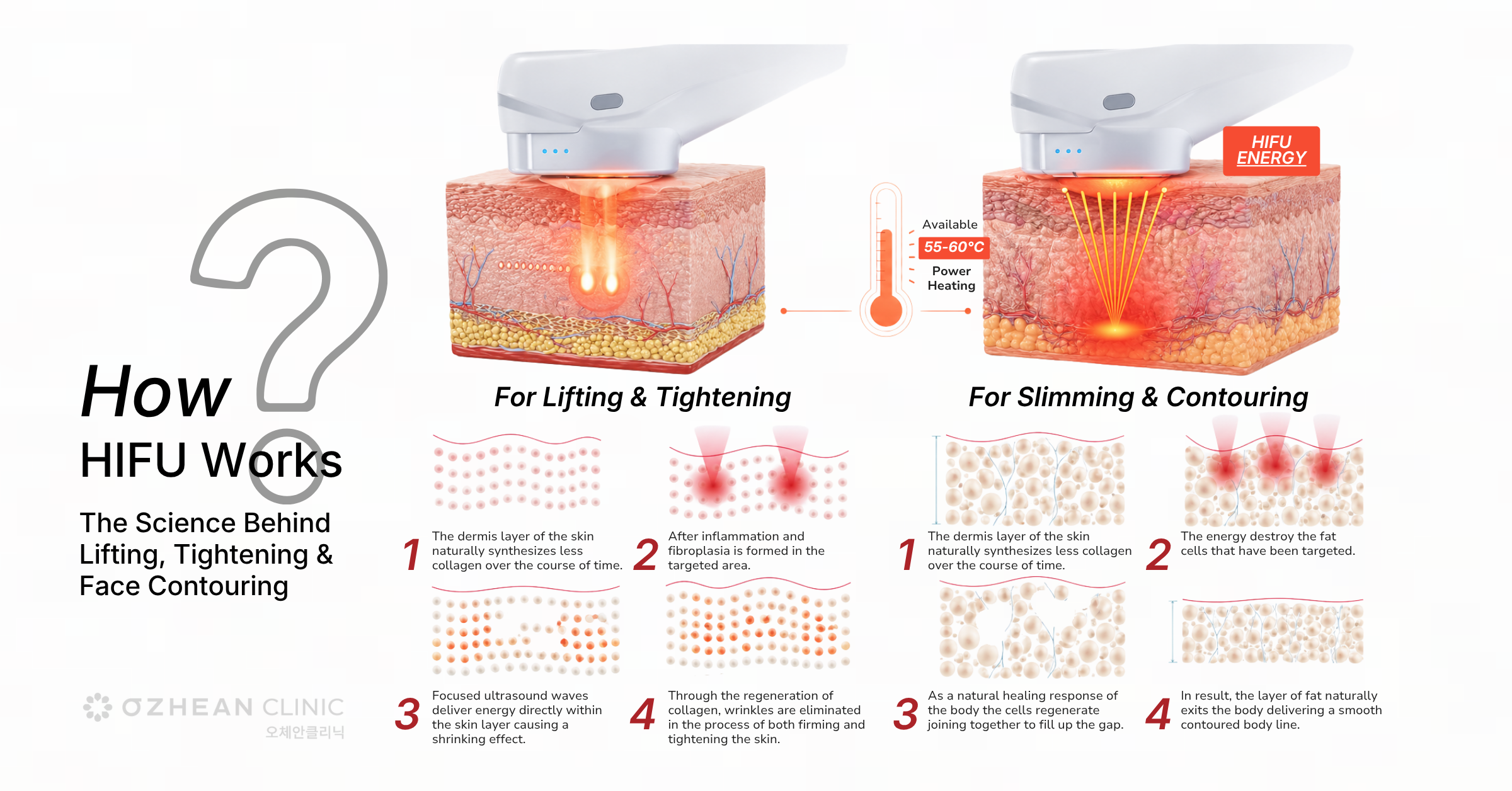
At Ozhean Clinic, HIFU is not performed as a generic treatment. Instead, it follows Korean Face Mapping principles, ensuring precision and facial harmony.
Korean Mapping Focus Areas
- V-Line Sculpt
Targets lower cheeks and jawline to create a sharper, more tapered chin - Cheekbone Softening
Lifts mid-face to reduce heaviness and tired appearance - Mid-Face Volumizing (via Lifting)
Improves cheek position and reduces nasolabial folds - Double Chin Reduction
Targets submental fat for a cleaner jawline
This customised approach is what differentiates Korean-style HIFU at Ozhean from standard treatments.
Is HIFU Treatment Painful?
The short answer:
HIFU can be uncomfortable, but it is generally tolerable for most individuals.
Pain perception varies depending on each person, but common sensations include:
- Warm or heating sensation
- Tingling or prickling
- Occasional brief sharp pulses
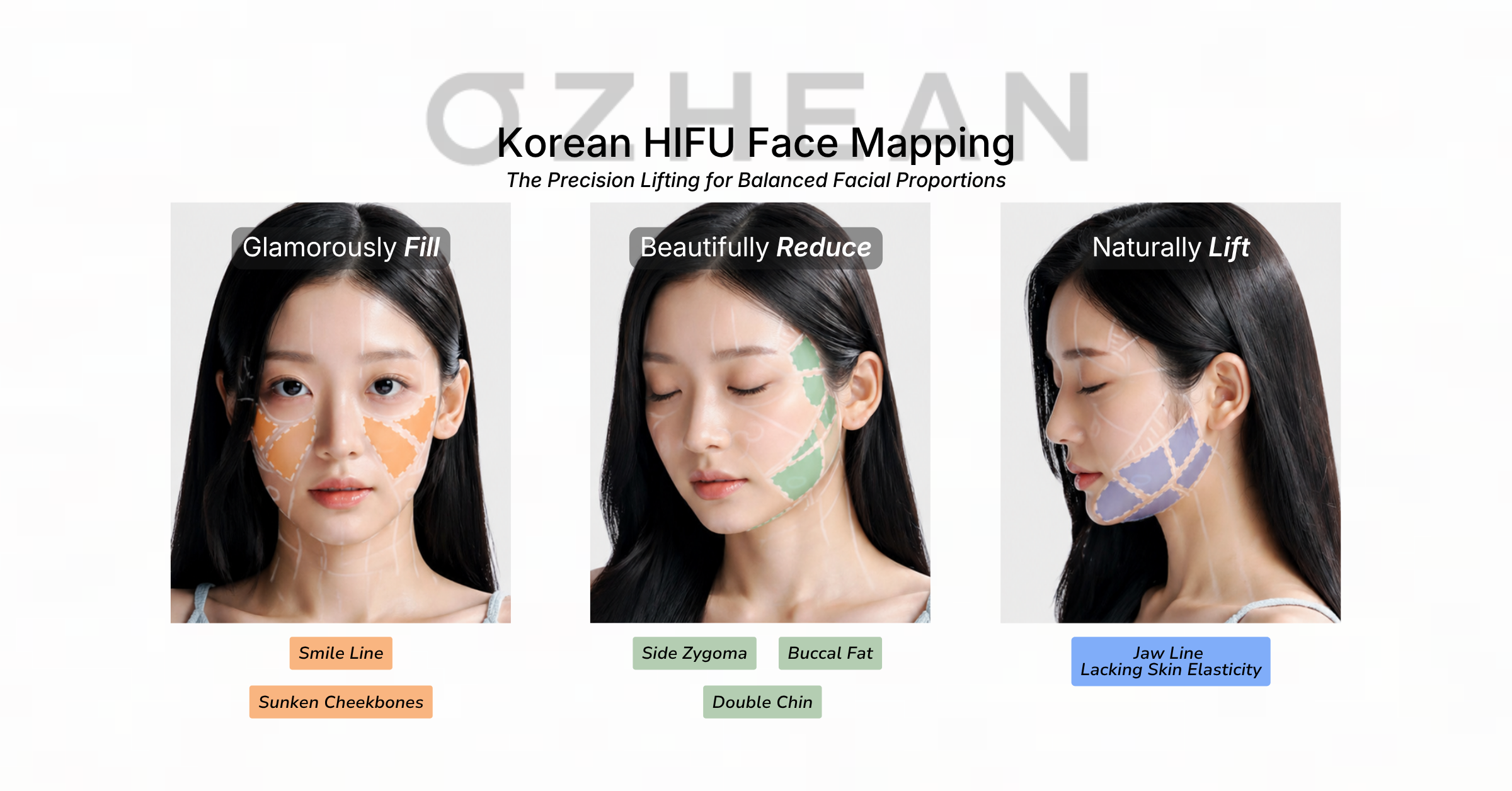
Areas such as the jawline, cheekbones, and forehead, where the skin is thinner or closer to bone; may feel more sensitive.
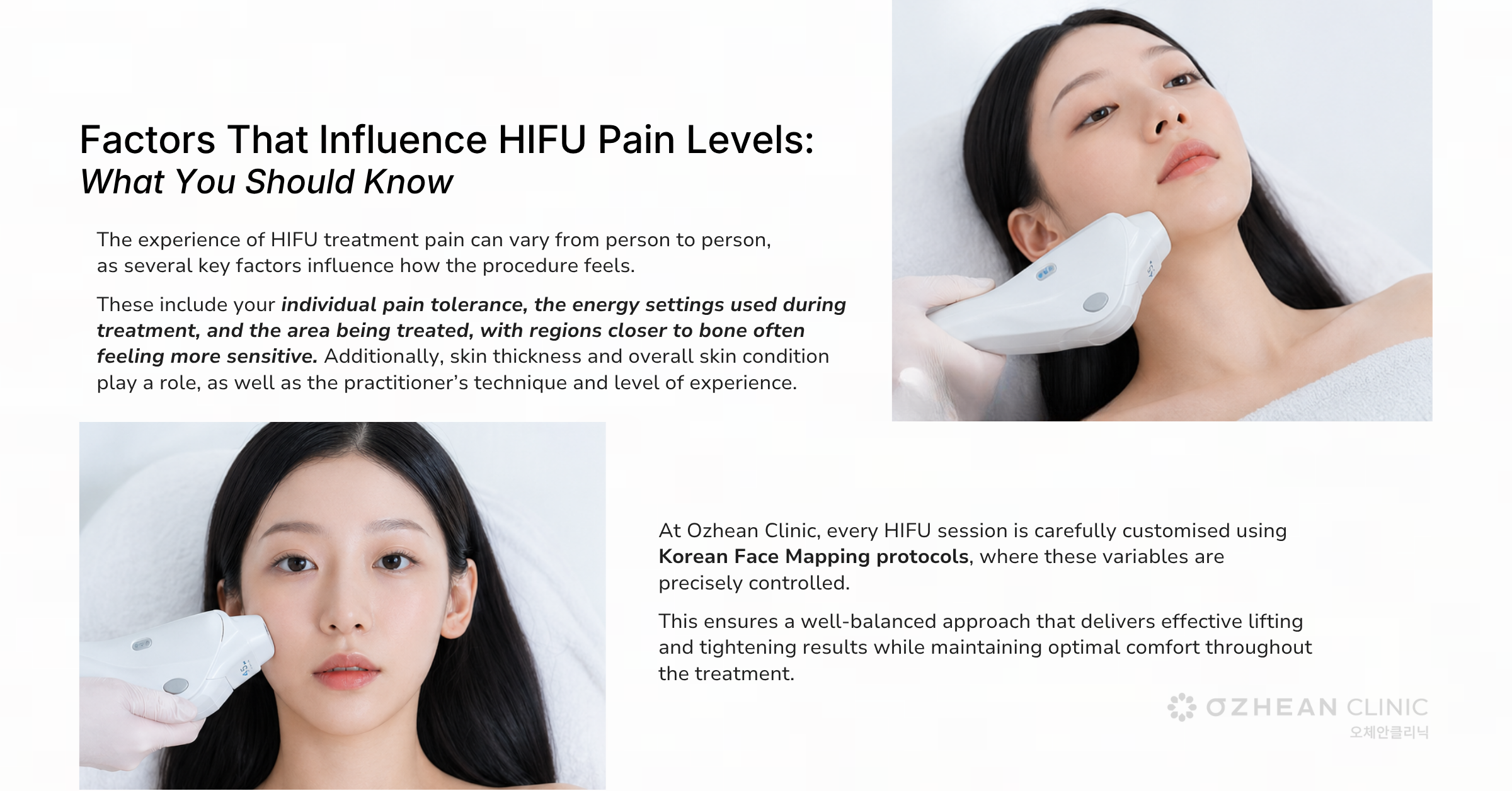
Factors That Influence Pain Levels
Several variables determine how HIFU feels:
- Individual pain tolerance
- Energy settings used during treatment
- Treatment area (bone proximity matters)
- Skin thickness and condition
- Practitioner’s technique and experience
At Ozhean Clinic, these factors are carefully managed to ensure a balanced experience between comfort and effectiveness.
How Korean Clinics Minimise Discomfort
Professional clinics like Ozhean Clinic implement multiple strategies to reduce discomfort:
- Application of topical numbing cream
- Adjusting energy levels based on patient tolerance
- Allowing short breaks during treatment
- Continuous communication between practitioner and patient
This ensures that the procedure remains safe, controlled, and as comfortable as possible.
What to Expect Before HIFU Treatment at Ozhean
Every HIFU session at Ozhean begins with a comprehensive consultation.
Pre-Treatment Process
- Detailed skin assessment
- Personalised Korean Face Mapping design
- Discussion of goals and expected results
- Explanation of sensations and aftercare
This step ensures that each treatment is fully customised and aligned with your facial structure.
What Happens During the Procedure
The HIFU treatment process is straightforward:
- Cleansing of the treatment area
- Application of ultrasound gel
- Delivery of energy in controlled, mapped passes
Duration: Typically 30–90 minutes depending on the area treated
Patients may feel intermittent sensations, but these are usually brief and manageable.
What to Expect After HIFU Treatment
Post-treatment effects are generally mild:
- Slight redness or swelling
- Temporary tenderness
- No major downtime
Most individuals return to normal activities immediately.
Results Timeline
- Initial tightening may be felt early
- Visible lifting improves over 2–3 months
- Continued collagen regeneration enhances results
Pain vs Results: Is It Worth It?
When evaluating Is HIFU Treatment Painful, it’s important to weigh the experience against the outcome.
- Discomfort is temporary and short-lived
- No needles or surgery involved
- Results are progressive and natural-looking
For many, the trade-off is worthwhile, especially for those seeking non-invasive lifting with minimal downtime.
HIFU vs Other Skin Tightening Treatments
Compared to Radiofrequency (RF)
- RF heats more superficially
- HIFU penetrates deeper structural layers
Compared to Laser Treatments
- Lasers target surface and pigmentation
- HIFU focuses on lifting and tightening
Compared to Injectables
- Injectables add volume
- HIFU stimulates collagen and structure
HIFU is best positioned as a structural collagen treatment, not a volumising solution.
How Many Sessions Are Needed
- Most individuals require 1 session
- Results develop over 2–3 months
- Effects can last 6–12 months or longer
Maintenance
- Annual sessions are often recommended to sustain results
Why Korean Clinics Like Ozhean Focus on Face Mapping
Customization
Different skin layers (1.5mm–4.5mm) are treated based on skin thickness and fat distribution
Balanced Proportions
The goal is a refined, smaller-looking face aligned with Korean beauty standards.
Combination Approach
HIFU is often paired with:
- Botox (for jaw slimming)
- Fillers (for contour refinement)
This creates a complete V-line harmony strategy.
Advanced Advantages (Korean HIFU Technology):
- Targets the SMAS layer for true structural lifting without surgery
- Stimulates deep collagen regeneration for long-term skin tightening
- Enables precise fat reduction in areas like double chin and lower cheeks
- Utilises multi-depth transducers (1.5mm–4.5mm) for customised treatment
- Supports progressive skin contraction and lifting over 2–3 months
- Korean Face Mapping enhances facial proportion and symmetry
Additional strengths:
- Non-invasive with minimal to no downtime
- Improves jawline definition and V-line contour
- Enhances skin firmness, elasticity, and texture
- Suitable for face, neck, and targeted contouring areas
- Can be combined with other treatments for comprehensive facial rejuvenation
So, Is HIFU Treatment Painful?
The reality is:
- Mild discomfort is possible
- Pain levels vary by individual
- Most patients find it manageable and brief
With proper technique and Korean mapping protocols, HIFU becomes a precise, effective, and tolerable treatment.
Find out if HIFU is right for you
Book a personalised consultation at Ozhean Clinic today to understand your skin condition, comfort expectations, and customised treatment plan, designed with Korean precision for natural, lifted results.